

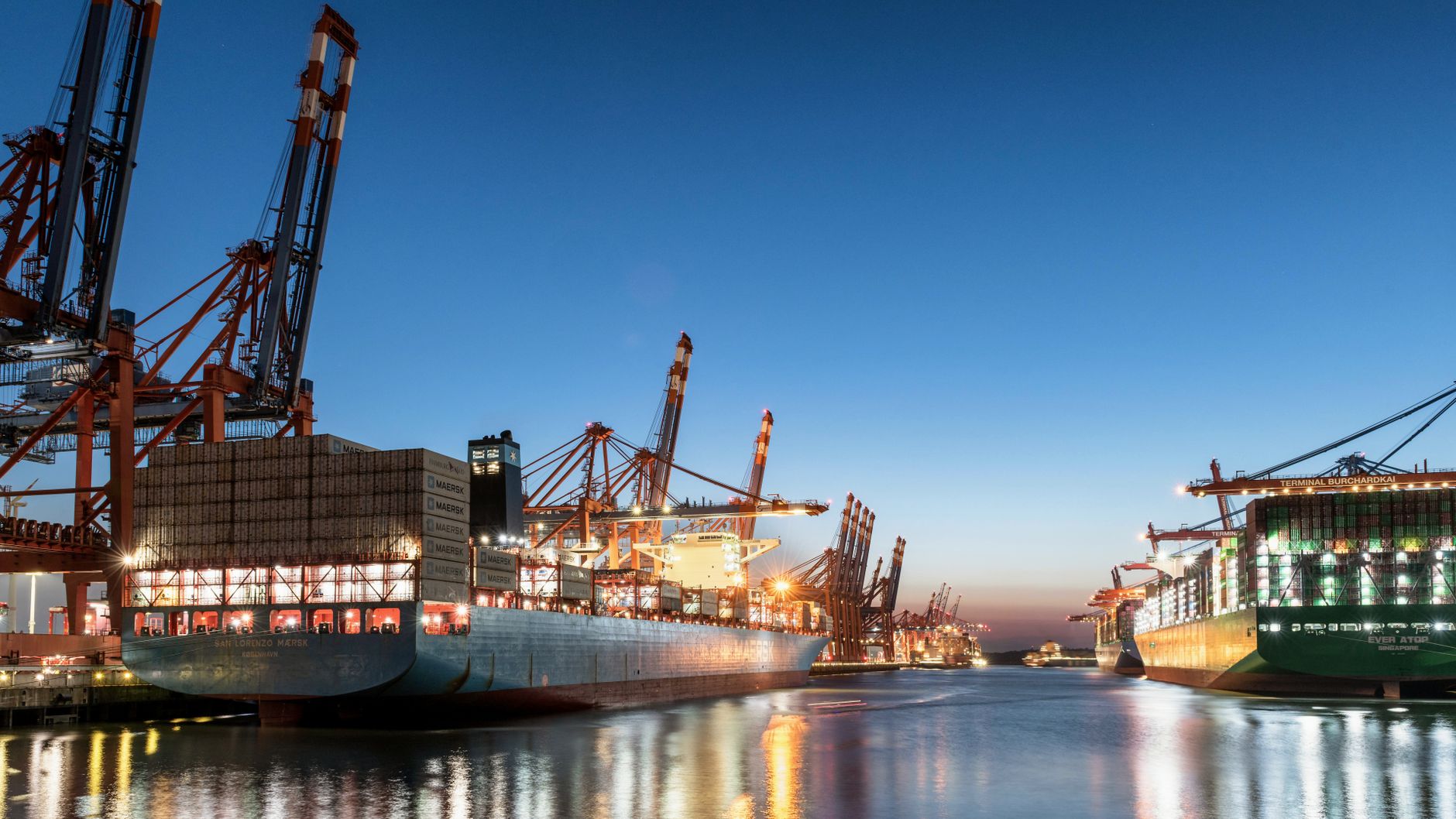
Ports are grappling with “burst congestion” – short, intense waves of vessel arrivals that overwhelm cranes, yards and landside links, demanding new flexibility and digital coordination.
Understanding Burst Congestion
Ports worldwide are now confronting a problem that cannot be solved by looking at annual capacity alone: too many ships arriving at exactly the wrong time. Even a port equipped with sufficient cranes, berths and yard space can grind to a halt when vessel arrivals cluster within a short window. The World Bank and S&P Global have highlighted this in the latest Container Port Performance Index, defining burst congestion as short, intense periods of clustered vessel arrivals that overwhelm berths, yards and landside connections.
Why Traditional Capacity Planning Fails
Alan Murphy, CEO of Sea‑Intelligence, describes vessel bunching as creating “an extraordinarily high workload in one week and none in the second week”. This volatility translates directly into higher risk of port congestion, with knock‑on effects that quickly spread to truck, rail and barge networks. As Hanna Stelzel of the Port of Rotterdam notes, many issues labelled as “port congestion” are actually symptoms of broader supply‑chain disruption caused by low schedule reliability of deep‑sea container vessels.
Real‑World Impacts on Terminals
A terminal that can comfortably handle ten ships spread evenly across a week may struggle badly when five arrive within 24 hours after a typhoon or a geopolitical diversion. The result is familiar across the 2020s: anchorages fill, cranes and labour become oversubscribed, yards reach critical density and trucks cannot clear boxes quickly enough. Hapag‑Lloyd’s CEO Rolf Habben Jansen warned that the biggest concern is not berth availability but the capacity of customers to pull inventory from terminal yards.
Strategic Responses: Flexibility and Digital Coordination
Building new berths for every schedule shock is unrealistic. Ports therefore need greater flexibility:
- Spare yard capacity and off‑dock storage zones.
- Adaptable labour arrangements and extended gate hours.
- Stronger rail and barge links capable of absorbing sudden peaks.
- Digital platforms for joint feeder‑berth planning and “controlled transparency” among competing terminals.
Rotterdam’s pilot of joint feeder berth planning has already shown that better coordination can unlock latent capacity without physical expansion. Similarly, Maersk’s push for rapid container pickup at congested European ports aims to keep yard utilisation below the 85‑90 % threshold that triggers bottlenecks.
Just‑In‑Time Arrival and Future Resilience
Andreas van der Wurff of A.P. Moller‑Maersk explains that Just‑In‑Time (JIT) arrival allows ships to optimise speed en route so they reach port when berth, fairway and nautical services are available. While wars, droughts and typhoons remain beyond anyone’s control, the ability to react swiftly when six ships appear where planners expected two is the new benchmark for resilience. Designing for the “Friday morning when six Tuesdays arrive at once” is now a strategic imperative.
At Oceanic Express LLP we continuously monitor these dynamics and work with our Kolkata‑based partners to provide flexible freight solutions that mitigate the impact of burst congestion. Our integrated logistics platform, combined with real‑time visibility and proactive carrier engagement, ensures that your cargo moves efficiently even when ports experience sudden spikes in demand.
If you want to discuss how Oceanic Express LLP can help your supply chain stay resilient amid burst congestion, contact our Kolkata team today at +91‑9830041358 or +91‑9831034014. Our experts are ready to design a tailored freight strategy that safeguards your shipments against unpredictable port arrivals.