

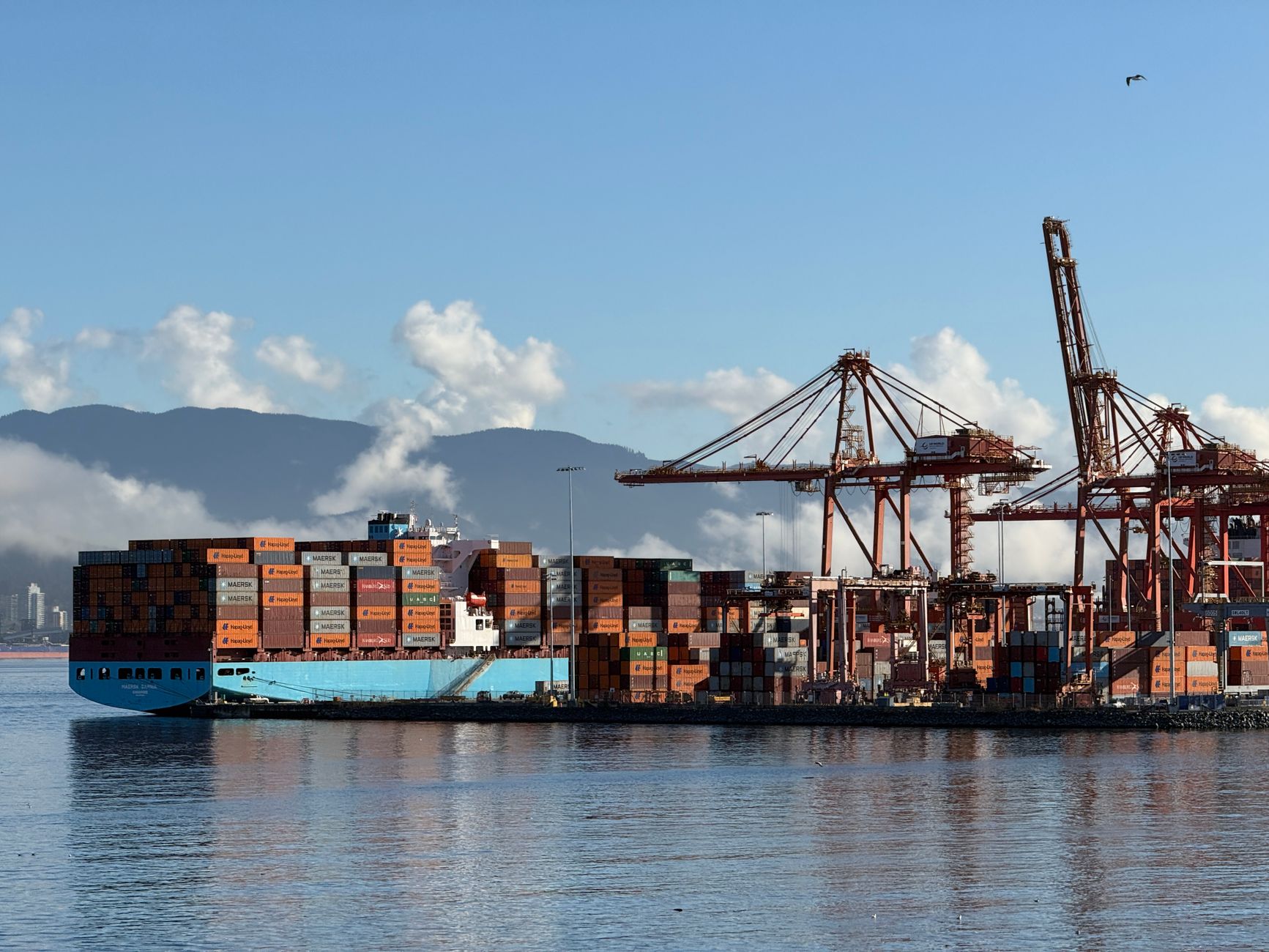
Four major carriers have rolled out Panama Canal Adjustment Surcharges, yet industry analysts warn that shippers lack clear visibility on the true cost drivers behind these fees.
Why carriers are introducing Panama Canal Adjustment Surcharges (PCAS)
Four leading container lines – Hapag‑Lloyd, Maersk, MSC and ONE – have announced Panama Canal Adjustment Surcharges (PCAS) to offset revenue losses caused by the Panama Canal Authority’s (ACP) draft restrictions. Drewry Shipping’s senior manager Simon Heaney explains that the surcharges are meant to recover funds lost through reduced capacity, a direct consequence of El Niño‑driven low water levels.
Transparency gaps highlighted by industry analysts
Heaney’s latest report stresses that “container lines are starting to announce Panama Canal Adjustment surcharges, but, as usual, there is little context or justification provided to customers.” The Global Shippers’ Forum (GSF) echoes this sentiment. Director James Hookham notes that daily auctions of transit slots are inflating costs per TEU, yet shippers cannot verify whether the surcharge truly reflects the additional expense.
Impact on specific services – the US2 example
The Gemini Cooperation’s US2 service illustrates the financial ripple. Hapag‑Lloyd has added a US$130 per TEU PCAS effective 15 August, while Maersk has not. A Hapag‑Lloyd spokesperson told Seatrade Maritime News that the restricted draft could cut cargo capacity on the US2 service by roughly 10 %.
Using Veson Maritime’s VesselsValue data, the 11,100 TEU Grete Maersk loses about 1,110 TEU under the 15 m draft limit. If the freight were split evenly between Maersk and Hapag‑Lloyd customers, Hapag‑Lloyd would collect close to US$650,000 more in surcharges, despite identical cost structures.
Variations across carriers
Other carriers have set different PCAS rates:
- MSC – US$100 per TEU
- ONE (Premier Alliance member) – US$150 per TEU
- CMA CGM (Ocean Alliance) – US$500 per TEU from 10 September, when draft restrictions tighten to 14.63 m (26 August) and 14.48 m (3 September)
Regulatory constraints prevent carriers from openly discussing the methodology behind these fees, a point highlighted by Damas.
Future outlook and the risk of additional surcharges
As El Niño intensifies, more carriers are expected to follow the initial four in applying PCAS. The ACP has already limited the number of daily transits, prompting “auction fees for some non‑container vessels soaring,” according to Heaney. Although the ACP claims the new measures “will not affect the number of daily transits,” the lack of transparent cost breakdown fuels mistrust between carriers and shippers.
Heaney concludes that the broader issue is not limited to the Panama Canal. “The lack of transparency surrounding the myriad of surcharges levied by container lines is one of the reasons for the considerable mistrust and animosity that exists between carriers and their customers.”
What this means for shippers and how Oceanic Express can help
For importers and exporters in Kolkata and across India, the opaque nature of PCAS makes budgeting and route optimisation increasingly complex. Our team at Oceanic Express LLP monitors these developments closely, offering real‑time guidance on cost‑effective routing, capacity allocation and compliance with the latest canal regulations.
By leveraging our extensive network of agents and our deep understanding of carrier pricing structures, we help you navigate surcharge volatility and maintain supply‑chain resilience.
If you need expert advice on how Panama Canal Adjustment Surcharges could affect your shipments, contact Oceanic Express LLP today at +91‑9830041358 or +91‑9831034014. Our freight specialists are ready to provide a transparent cost analysis tailored to your cargo requirements.